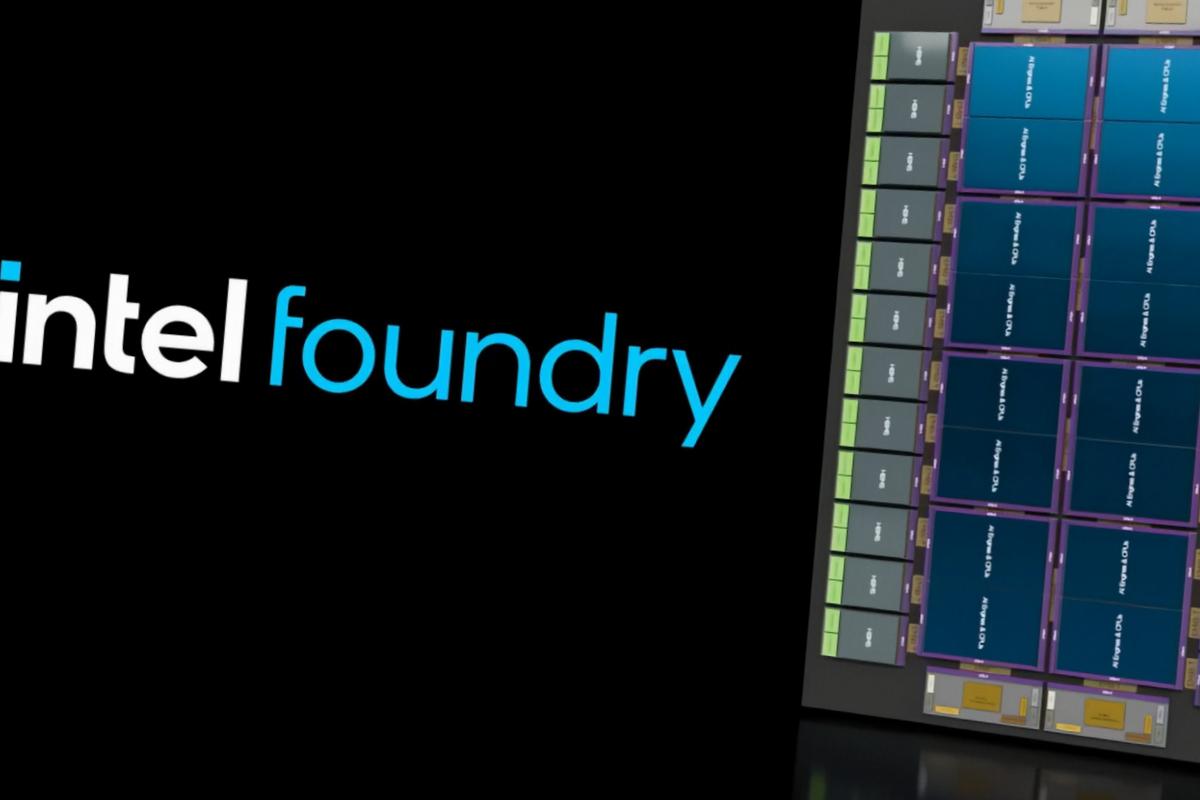
- Founded in 1968, Intel evolved from manufacturing memory to dominating the global x86 microprocessor market.
- Their catalog ranges from the basic Core i3 to the extreme power of the i9, adapting to every type of user.
- The company has innovated with hybrid P and E core architectures to optimize power consumption and performance.
- Beyond CPUs, Intel is currently competing in the graphics card sector with the Xe and Arc architectures.

If you've ever turned on a computer, chances are you've come across the logo of the blue giant . Intel isn't just another brand; it's the company that essentially invented how most PCs work today, creating the electronic "brain" that allows everything from a simple Word document to the most demanding game to run smoothly.
Over the decades, this American multinational has grown from a small semiconductor company in California to a global technology leader . They don't just focus on processors; their influence extends to chipsets, wireless networks, and now the competitive world of dedicated GPUs , setting the pace for modern computing.

The beginnings and the spark of success

It all started in 1968 in Mountain View, California, when Gordon Moore and Robert Noyce decided to go into business together after leaving Fairchild Semiconductor. Initially, they almost called themselves "Moore Noyce," but since that sounds like "more noise," they opted for Integrated Electronics , which, when shortened, became the Intel name we all know. It wasn't an easy road; they even had to buy the rights to the name from a hotel chain.
The first major leap came when they designed a revolutionary chip for Japanese calculators. They realized they could imbue simple machines with "intelligence ," which led them to launch the Intel 4004 in 1971 , the first commercial microprocessor. It was astounding at the time: 2.300 transistors executing 60.000 operations per second. Shortly after came the 8008, which doubled that processing power and began to fill offices and hospitals.
The golden age and the alliance with IBM

In the 80s, Intel made its decisive move. The launch of the 8086 and 8088 processors changed the game, especially when IBM chose the 8088 for its iconic PC. This created a domino effect that gave rise to the compatible computer market , making Intel the indispensable hardware supplier.

The evolution didn't stop, and we saw the 80286, the 80386 (the first 32-bit microprocessor adopted by Compaq), and the robust 80486. By the nineties, Intel was an unstoppable force and launched the Pentium line , which was five times more powerful than its predecessors. It was then that the "Intel Inside" campaign transformed the brand into a mark of quality that every consumer looked for when buying a computer.
Understanding the current range: i3, i5, i7 and i9
Over time, the company moved away from complex names and adopted a much clearer generational structure . This led to the creation of the Core series we see today, designed to cover every possible need:
- Intel Core i3: It's the ideal choice for basic tasks. Perfect for browsing, studying, or doing other things. light office automation without spending too much.
- Intel Core i5: The perfect balance. It's the all-rounder processor, capable of handling multitasking and gaming modern with incredible solvency.
- Intel Core i7: For those seeking high performance. It's the choice of the content creators and gamers who don't want commitments.
- Intel Core i9: The absolute beast. Designed for extreme workloadsprofessional video rendering and heavy computing.
Recent innovations and the challenge of nanometers

Intel hasn't been resting on its laurels and has introduced some very interesting concepts to remain competitive. One of the most notable is the hybrid architecture introduced in the 12th generation. Instead of using only identical cores, they now combine P-Cores (performance) for heavy-duty tasks and E-Cores (efficiency) for background processes, thus optimizing power consumption and temperature.
In terms of manufacturing, the company has had its ups and downs, especially when trying to break the 14-nanometer barrier. After several delays, they managed to implement the Intel 7 (10nm) process , allowing them to fit more cores into the same space. Furthermore, for smaller devices like tablets and Mini PCs, they offer the Intel Atom and Gemini Lake families , focused on maximum energy efficiency.
Beyond the CPU: Graphics and Connectivity

Intel has recently decided to enter the graphics card market. With the Intel Xe architecture and the launch of Intel Arc GPUs , they aim to compete directly with NVIDIA and AMD. Their approach is modular, allowing their chips to scale from simple embedded solutions to powerful computing workstations for AI and data centers.
Nor should we forget that Intel is the cornerstone of many standards. From the Wi-Fi network cards we use at home to the ATX standard for power supplies, its influence is pervasive. Although they have withdrawn from some sectors, such as flash memory, they remain the world's second-largest chip manufacturer , maintaining a strong presence in semiconductor innovation.
Intel has transformed itself from a small memory lab into the technological engine driving global computing. Through the evolution of its Core processors and its foray into the world of Arc GPUs, the company continues to define how we interact with technology, balancing raw power with efficiency to adapt to a world where artificial intelligence and mobility are paramount.